Killing our own project
Leaders across eleven military treatment facilities were improving care from a handful of patient comments, while critical problems sat unread in the rest. I set aside the patient booklet I inherited, and we built a way to hear every comment, so the urgent problems surfaced and leaders knew where to act first.
- Role
- Senior Design Strategist(Service Design)
- Scope
- Eleven military treatment facilities and their leadership, from hand-tagging patient comments to network-level priorities
- Team
- With a design strategy partner and two data scientists we brought on, alongside the client’s chief experience officers
- Industry
- Military health care
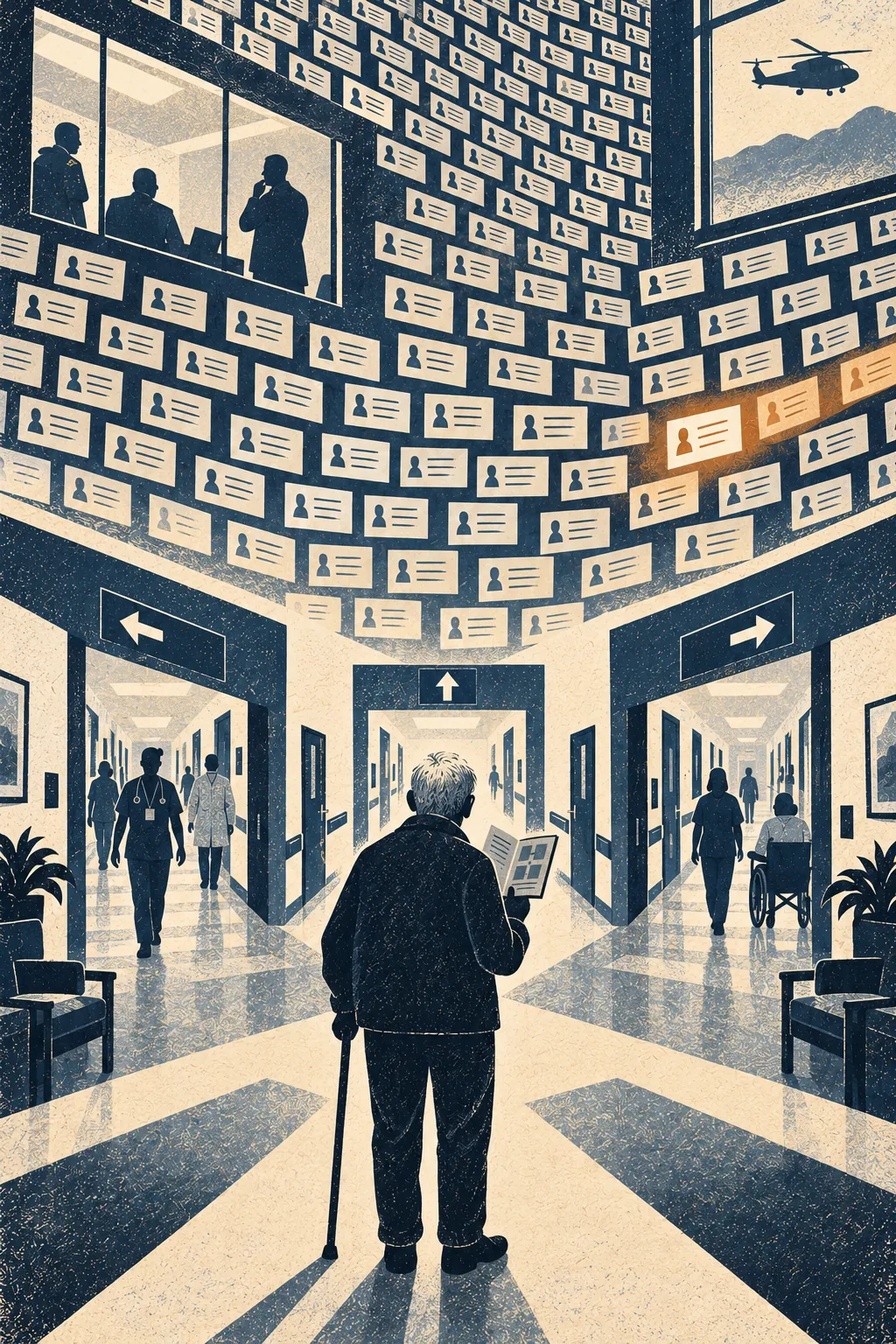
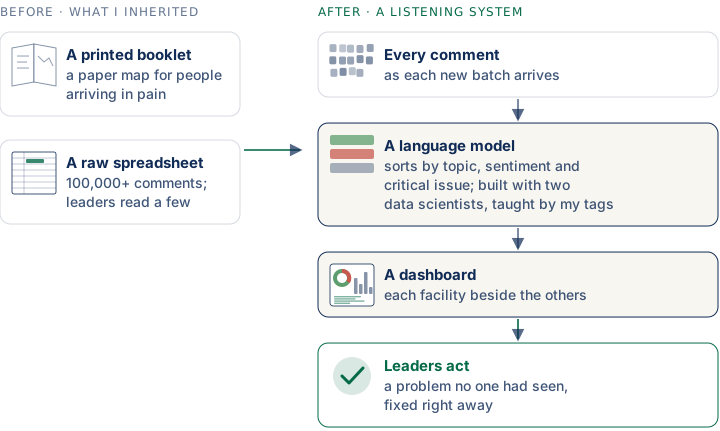
As she pulled the file up on her screen and started scrolling, I couldn’t believe what I was seeing. Thousands of comments, maybe tens of thousands, each written by a patient in their own words about the experience we had been brought in to improve. The more she talked about it, the more I realized how little of it was being used.
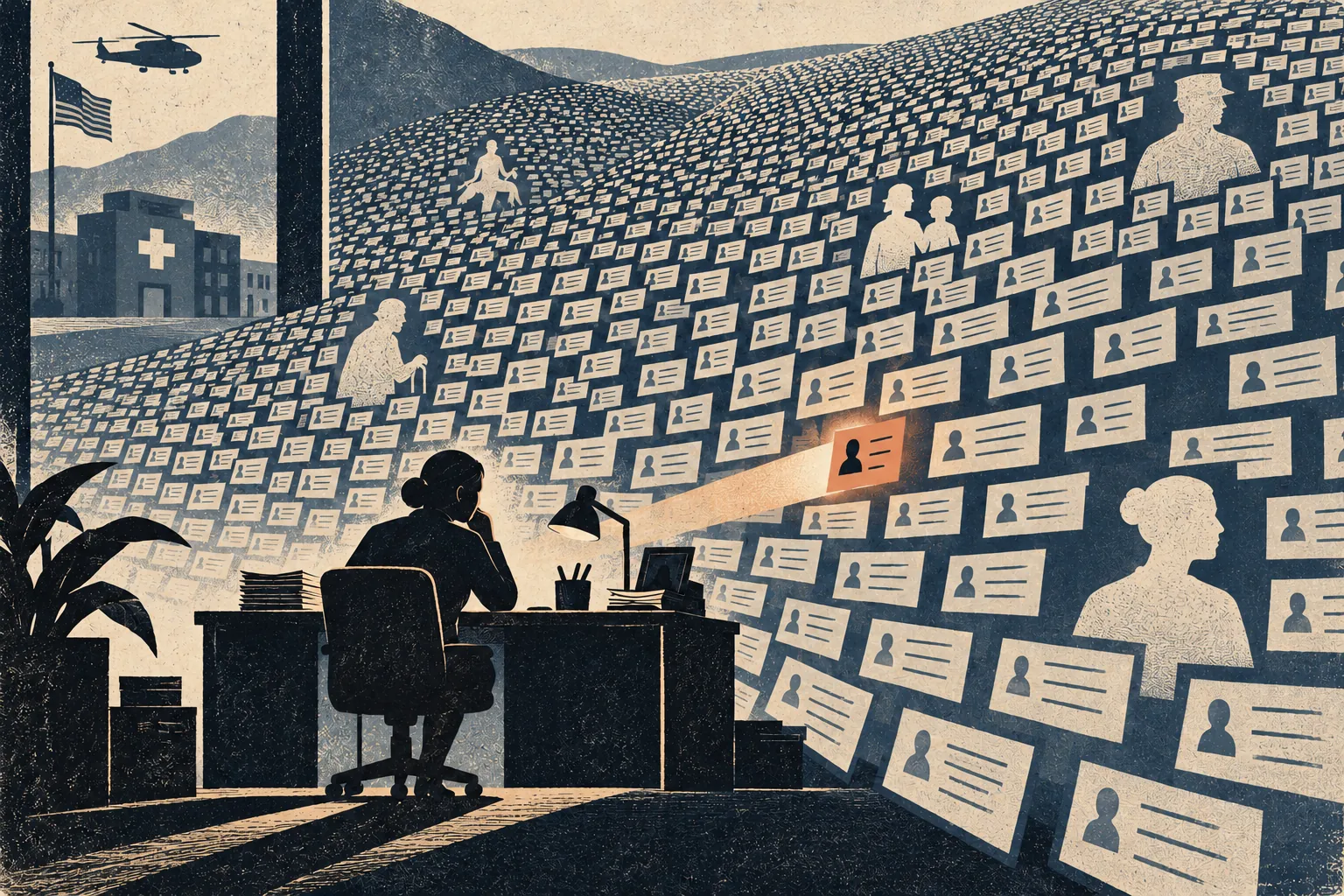
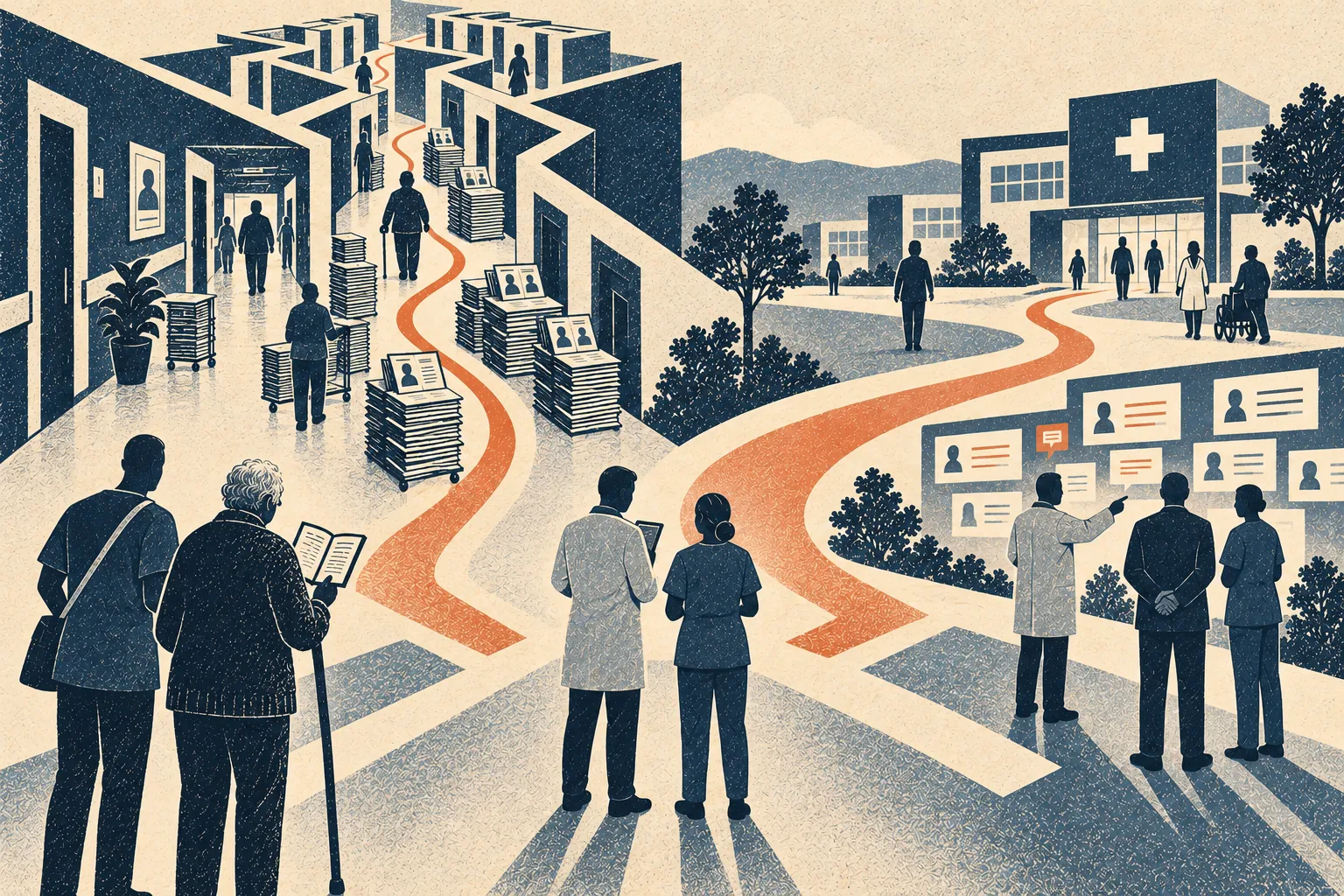
I joined mid-project across the National Capital Region’s eleven military treatment facilities. The work I inherited was a printed patient “passport”, with phone numbers, directions and a map. It asked people arriving in pain or distress to carry a paper map through a large building.
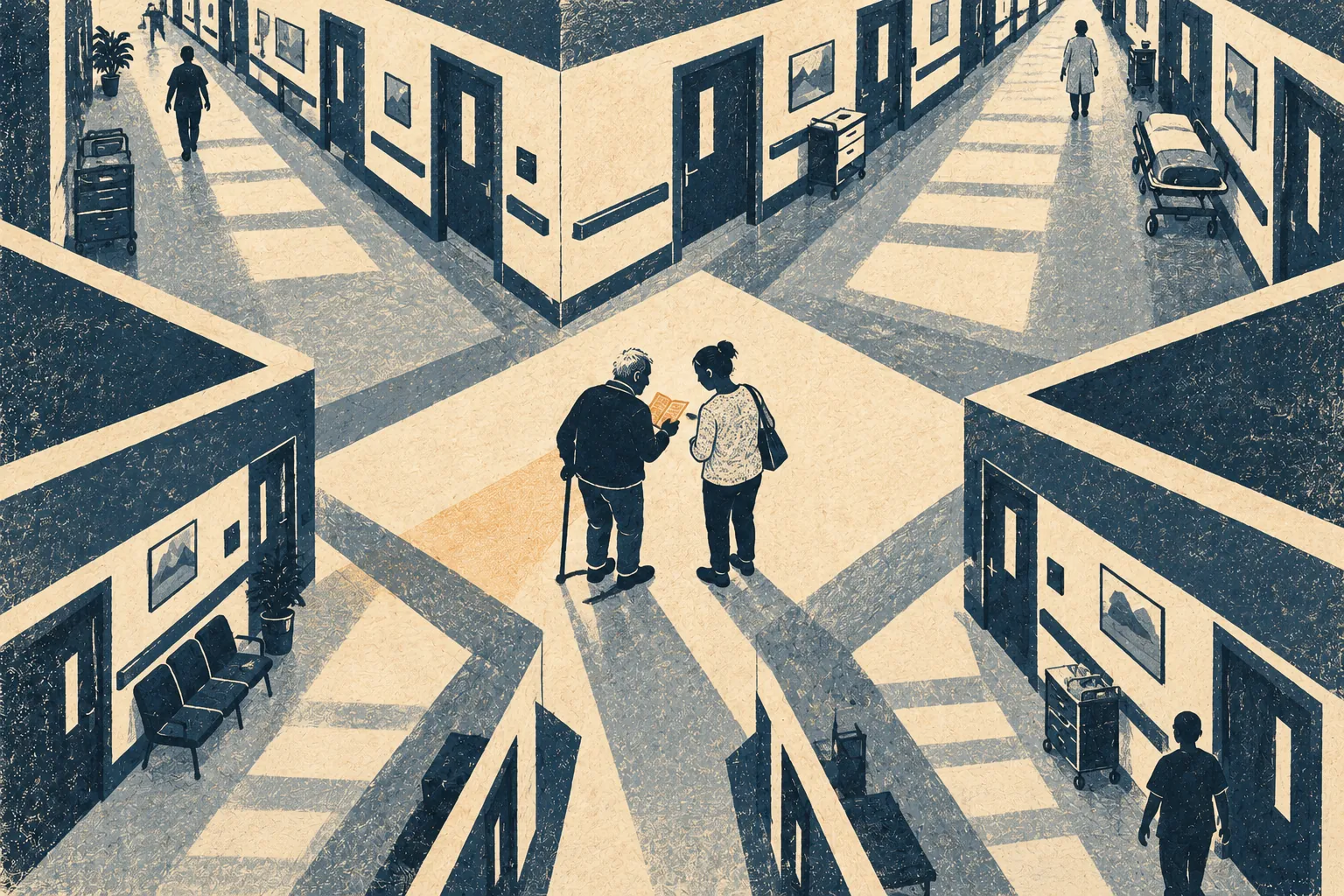
The file on her screen asked nothing more of patients: over a hundred thousand open-ended comments and growing, delivered as a raw spreadsheet. Leaders were improving care from the few someone had time to read, and critical problems sat in the rest.
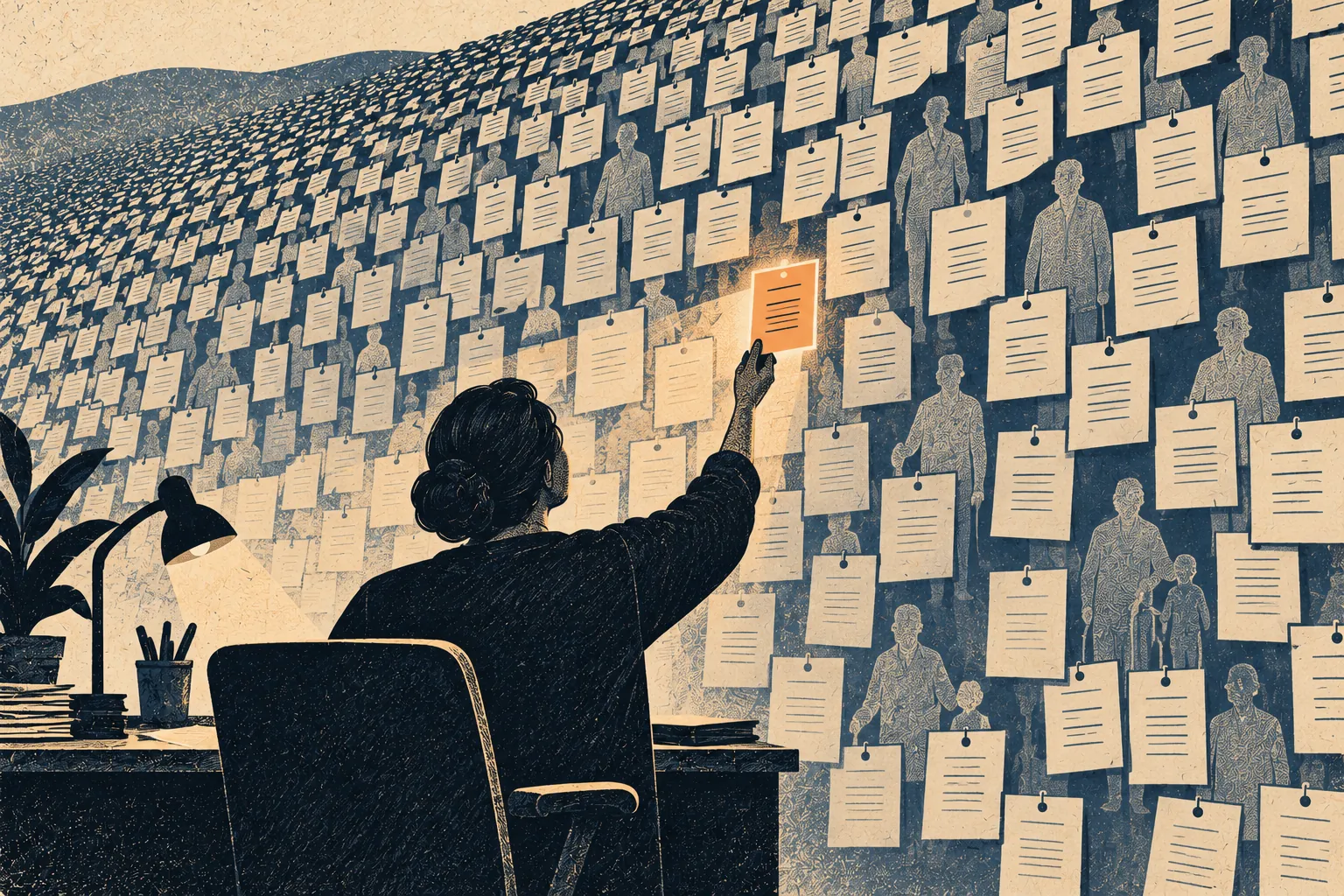
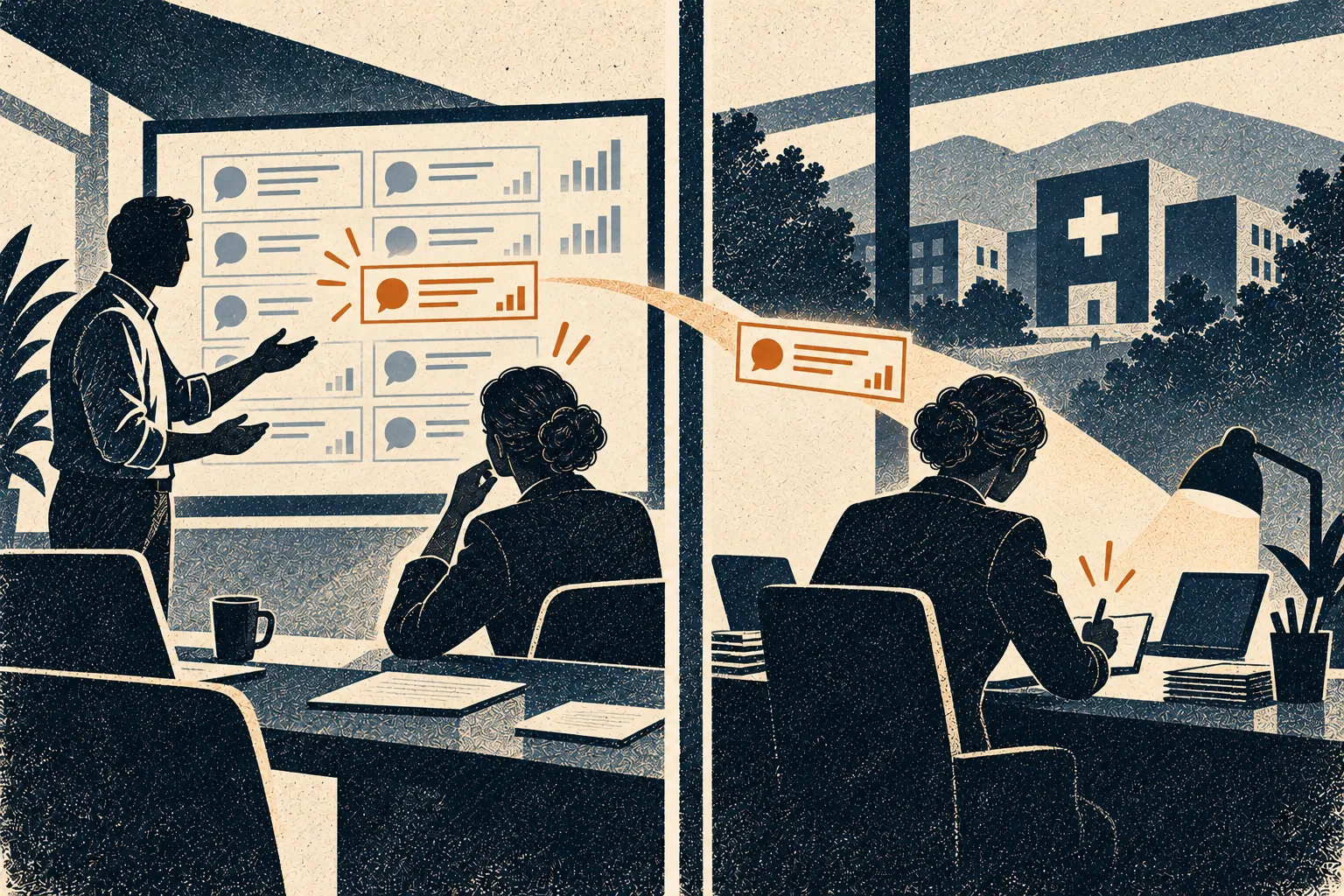
Betting that fixing the system patients moved through would do far more than any booklet, I built the case with my design strategy partner. What won it was a prototype made from their own patients’ comments. It meant walking away, mid-project, from a deliverable the client had already bought, for a much heavier build. They said yes.
See the originals
Before language models were everywhere, we brought on two data scientists to build a natural-language-processing system, and I taught it what to look for by hand-tagging thousands of comments. Every new batch arrived sorted by topic, sentiment and critical issue.
Testing the prototype, I added one more feature: each facility’s results beside the others’. They were already competitive, and none wanted to be at the bottom.
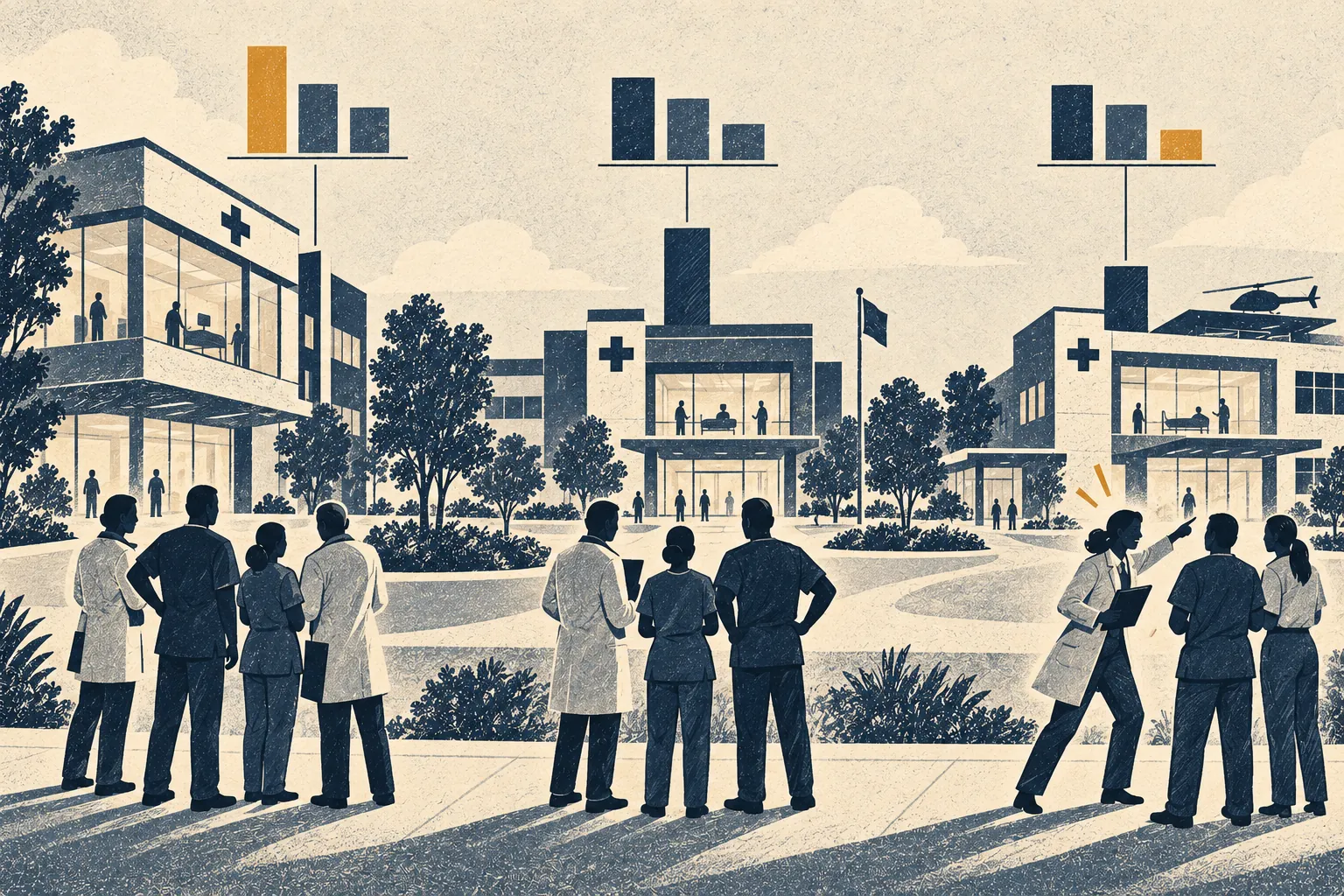
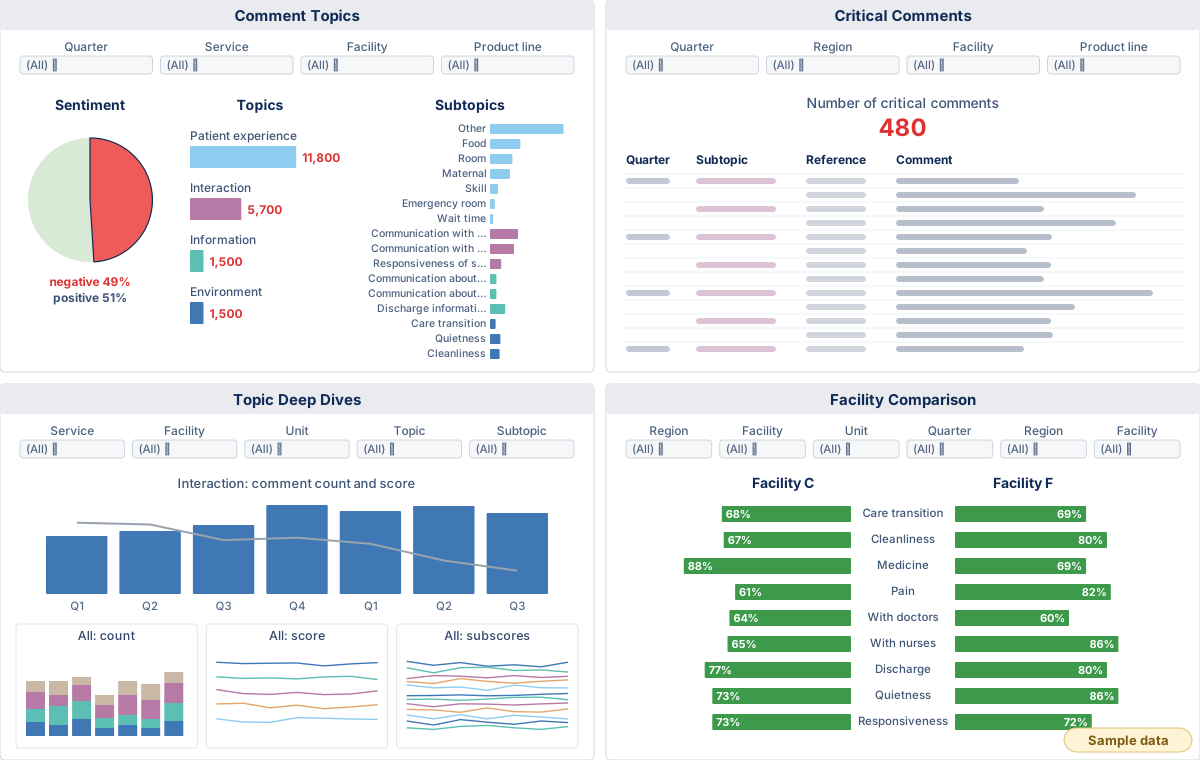
Walking through the prototype’s top ten pain points, the deputy director saw bathroom cleanliness for the first time, and it was acted on right away. The chief experience officer took the dashboard to her executive peers. It was adopted across the facilities and outlived our engagement. For the same contract, the client got a tool that let eleven facilities act on more than 100,000 comments, instead of a printed booklet.
Do the main work as well as it can be done, without becoming so focused on it that you miss the bigger opportunity beside it. When new evidence points somewhere bigger, have the nerve to leave the path you were on.
Illustrations made with AI, and an exhaustive amount of art direction by Peter Sharp.