One definition of the customer, across the whole service
On the access point team, we owned the pickup experience end to end, across digital and physical touchpoints. A decision about one small piece of it, our slot on the checkout page, sparked a bigger question for me: what does the right choice look like, and for whom? Answering it gave the organization a shared definition of its customers and a picture of its whole service.
- Role
- Senior UX Designer(Service Design)
- Scope
- The whole pickup service, digital and physical, in the US and Spain, from ride-alongs with drivers to the organization’s definition of its customers
- Team
- With my manager, and partners in product, engineering, UX research, marketing and business development
- Industry
- E-commerce customer experience
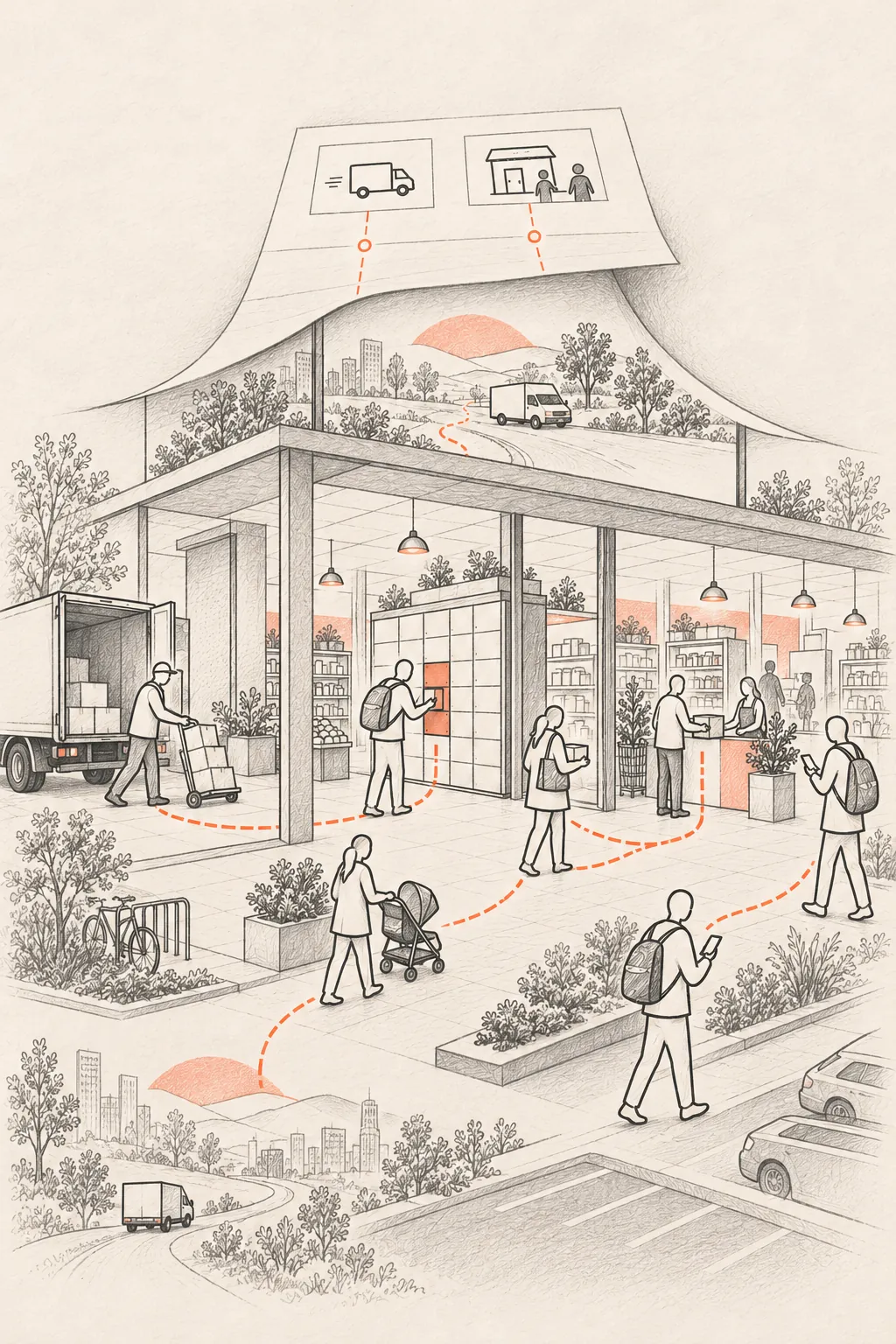
As we went back and forth over the delivery choice on the checkout page, ship it to your home or ship it to a pickup location, I realized how much of the decision rested on assumptions. We were about to guide that choice without really knowing who was making it.
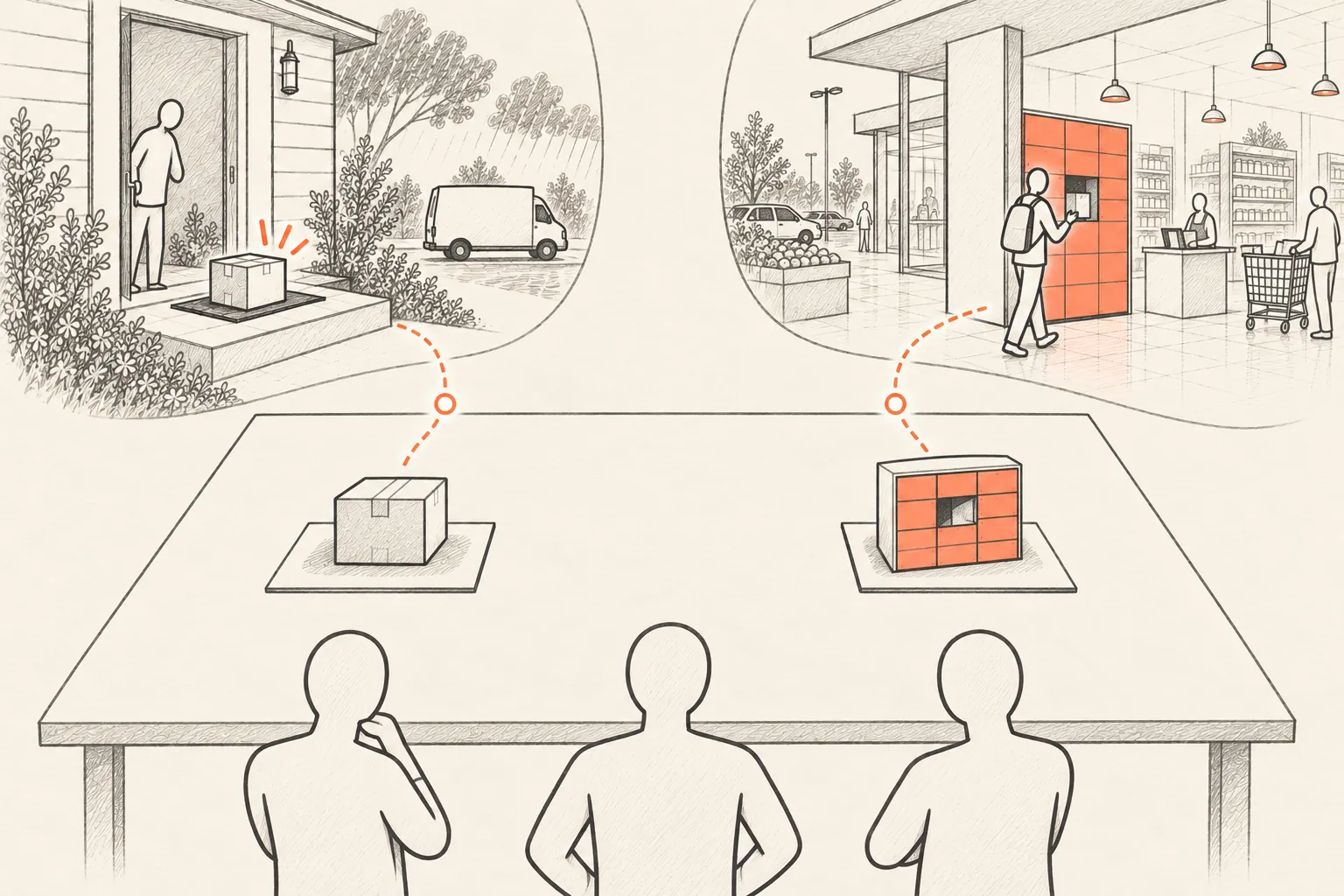
On the access point team, the first set up to design the pickup experience as a whole, I was the lead designer. Customers rated pickup highly, yet most who picked up once never came back. At checkout, the choice was bare: your home or a pickup location, with little about why one might suit you better. To help someone decide, I first had to know who used access points, what they were trying to get done, and what they expected when they got there.
My manager had brought me in to do service design, so I handed the feature I was designing to a more junior designer and moved to the whole access point ecosystem. I gave up quick feature wins to understand our customers first, looking for the gaps between what they expected and what they actually got. I designed and ran the research, with my own fieldwork in Austin and Madrid. The checkout options themselves were later updated by that junior designer; my part was the research and the strategy.
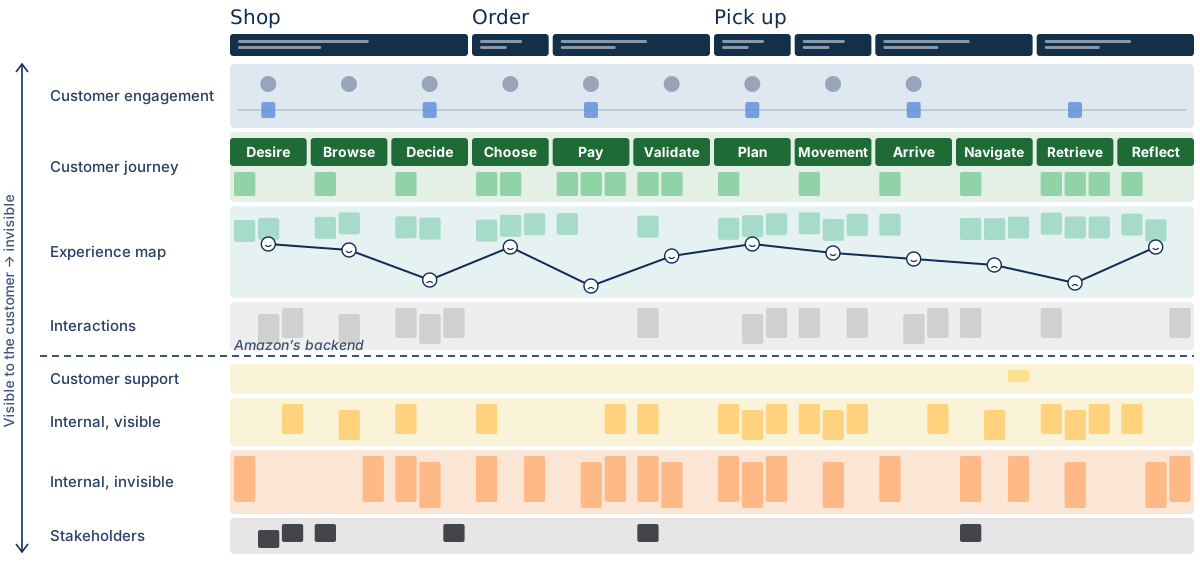
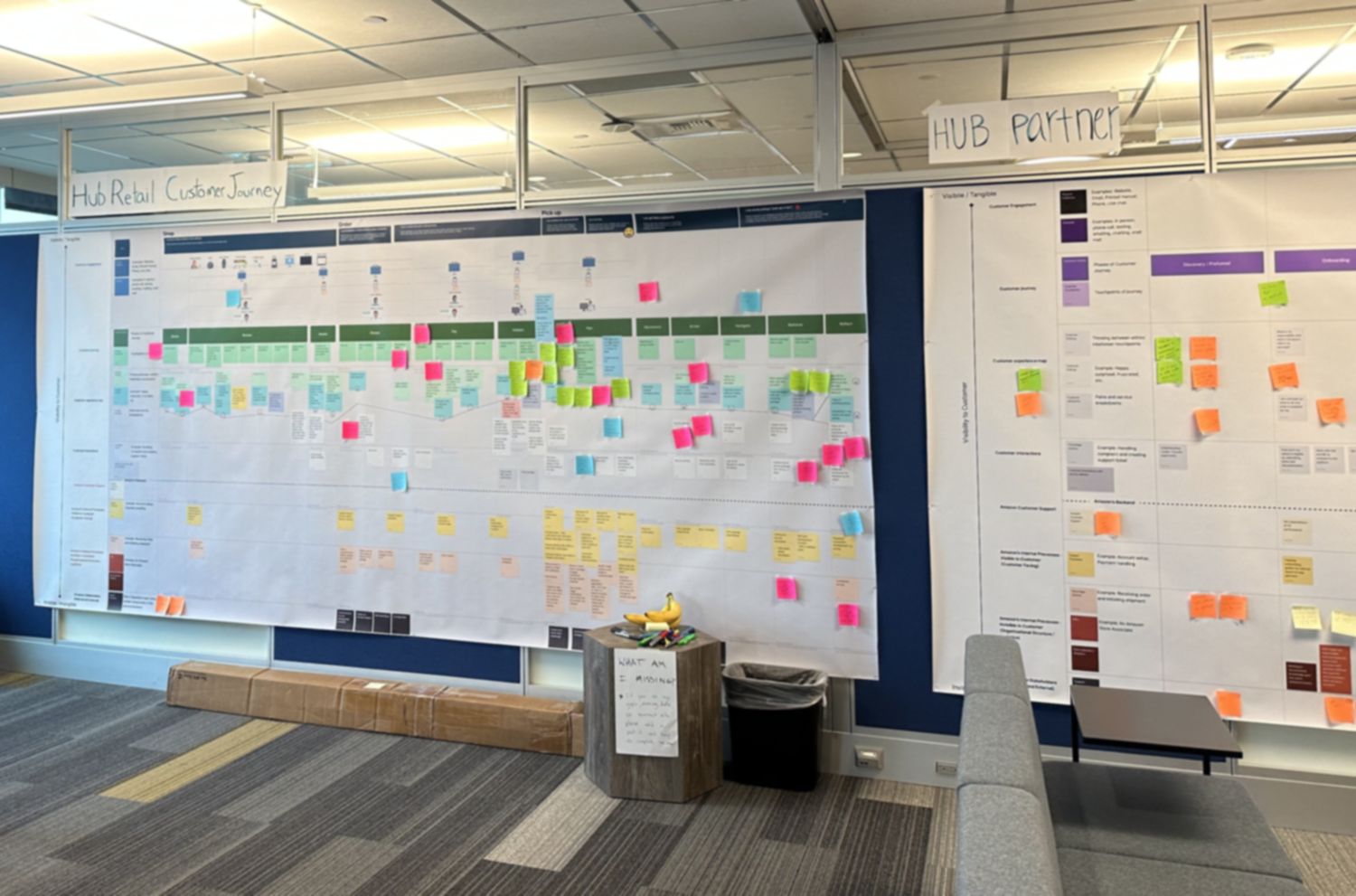
I built a service blueprint large enough to cover a wall, connecting the Last Mile organization to the access point team, and worked beside it for a couple of days with a card asking “What am I missing?” People stopped, asked questions and added their own notes, and more than one said they wished they’d had it when they were onboarding.
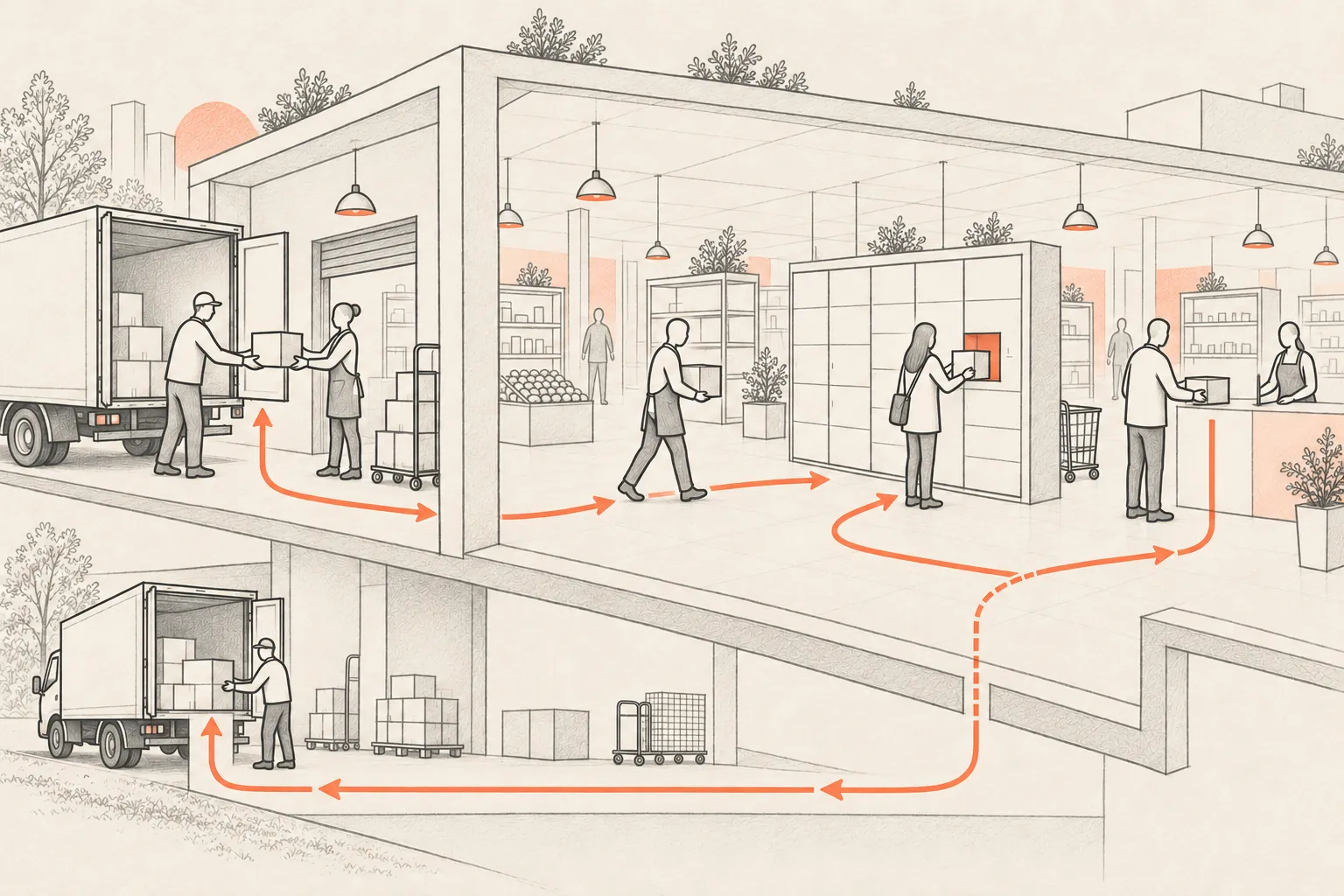
The access point blueprint, redrawn as structure
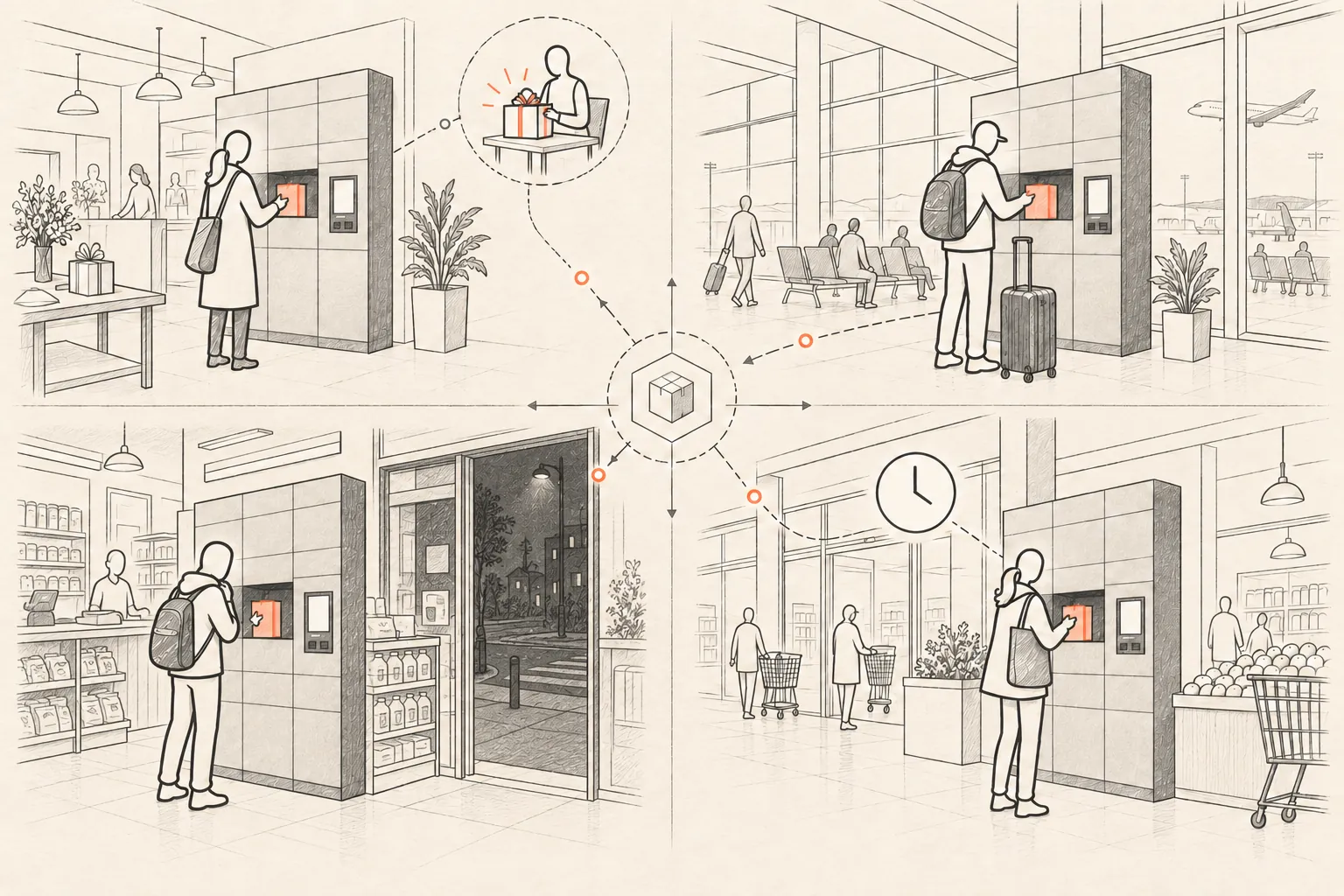
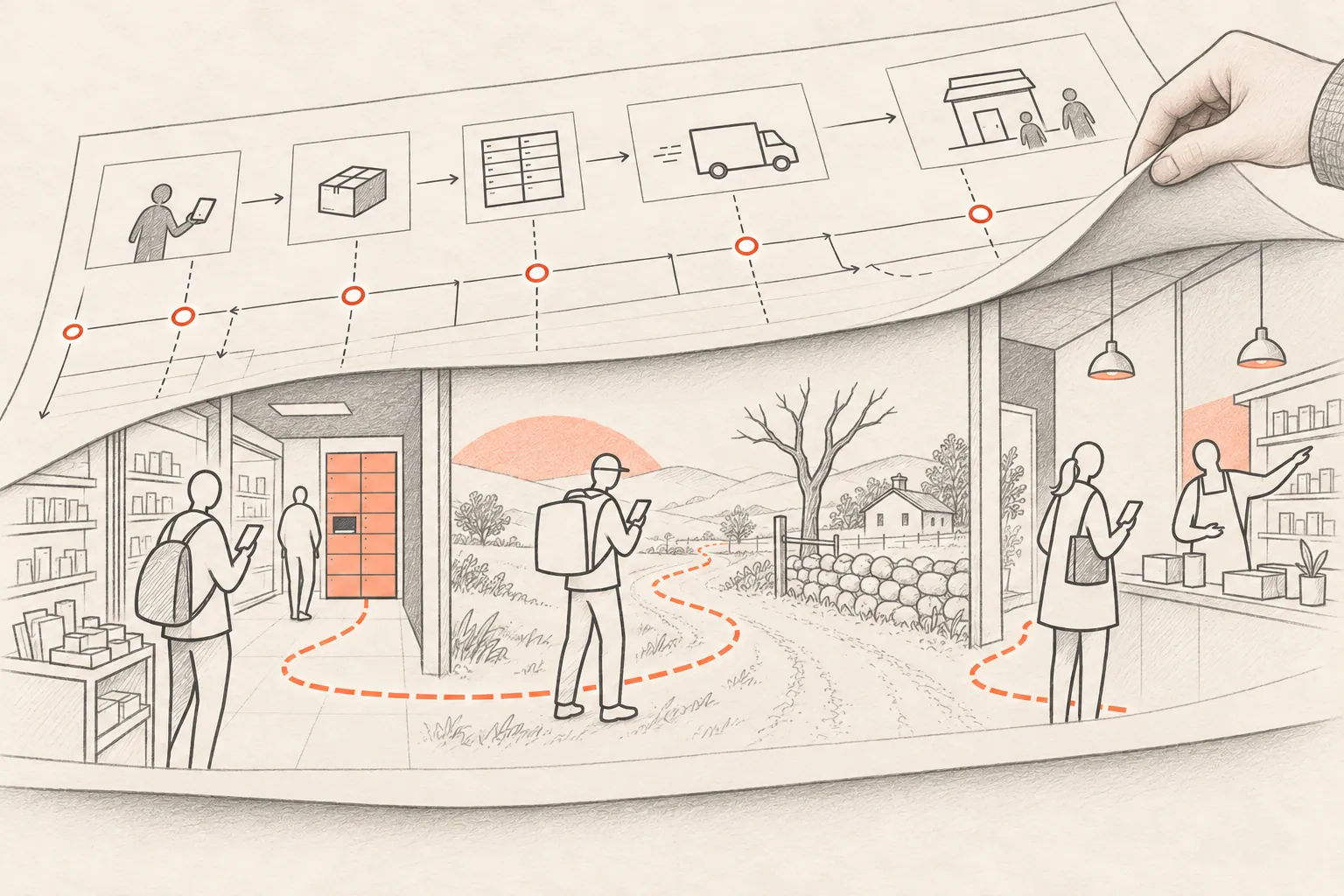
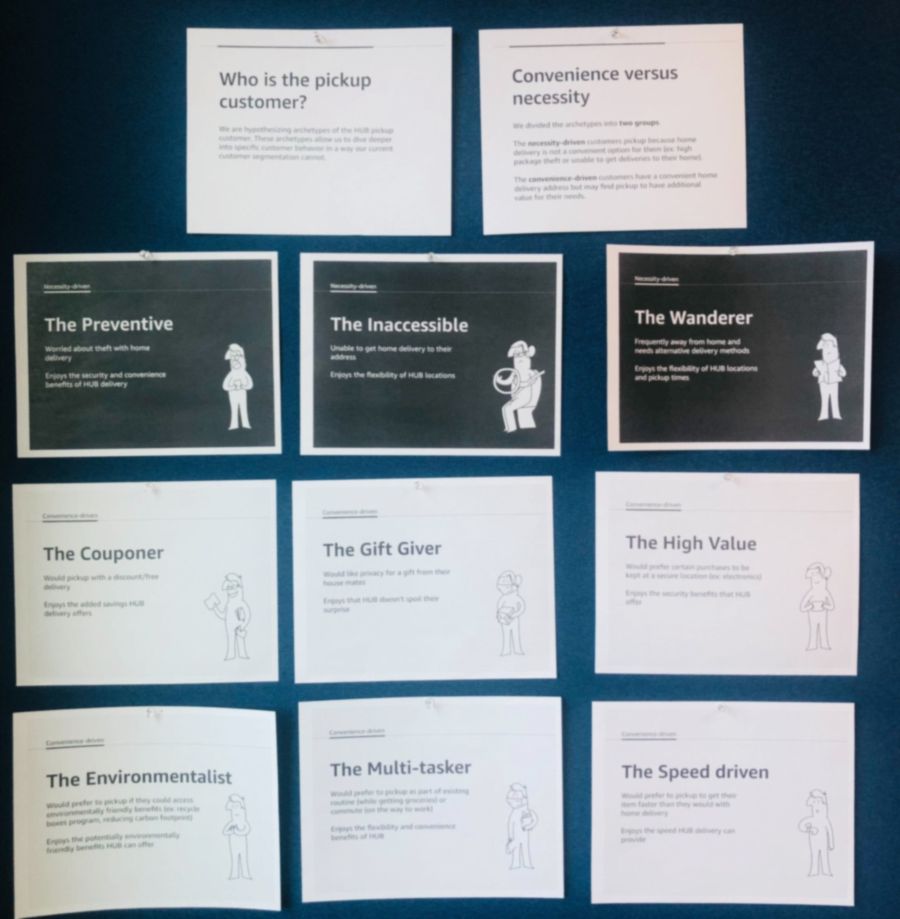
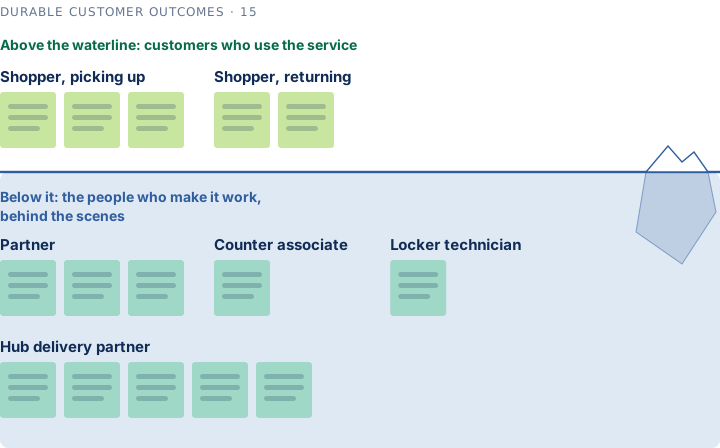
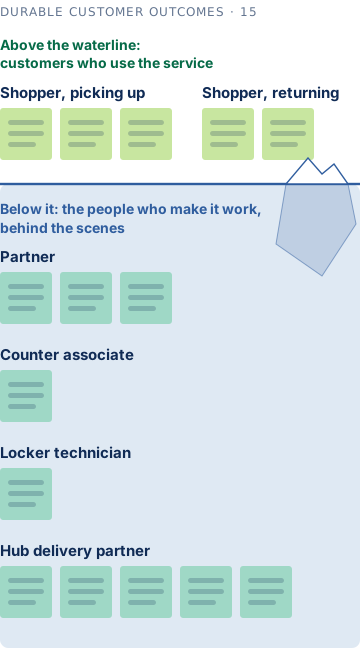
Customers told us about lockers placed where they didn’t feel safe, and how uneasy they felt collecting a package they had already paid for. Others had no official address and described where a package should go by landmarks: next to the old dead tree, down this dirt road. In Madrid, expectations were shaped by culture. Access points served nine customer archetypes in the US, some using them out of necessity and some out of convenience. They worked alongside the Durable Customer Outcomes I had rewritten in customers’ own words: fifteen of them, defining what each kind of customer needs, from shoppers to the partners and locker technicians who make pickup work.
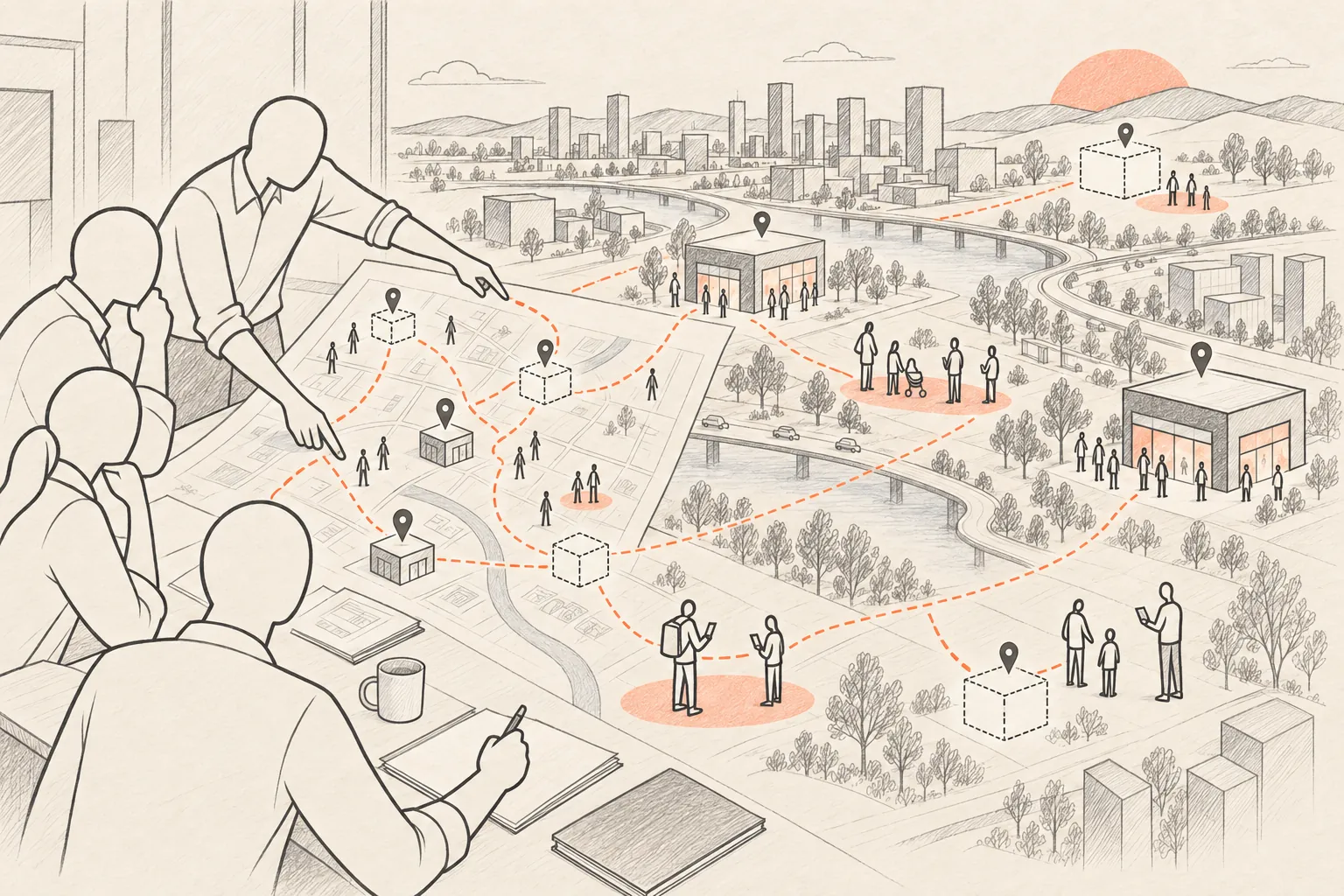
With the blueprint and research in hand, I was invited into marketing and business development meetings, and onto tiger teams a level above me. The business was about to put thousands of new lockers into new cities and countries, but our archetypes described US customers, and we didn’t know how pickup would land elsewhere. So I wrote a business case for research in the markets business development was already expanding into: local agencies running deep ethnographic research in each new city, focused on people who’d used pickup once, rarely or never, and tied to the targets the business already had for keeping customers and growing pickup. If we were going to expand where few people used pickup, we needed to understand why they didn’t, so we could serve them better. It won director approval, and was named the most important research our department would do the next year.
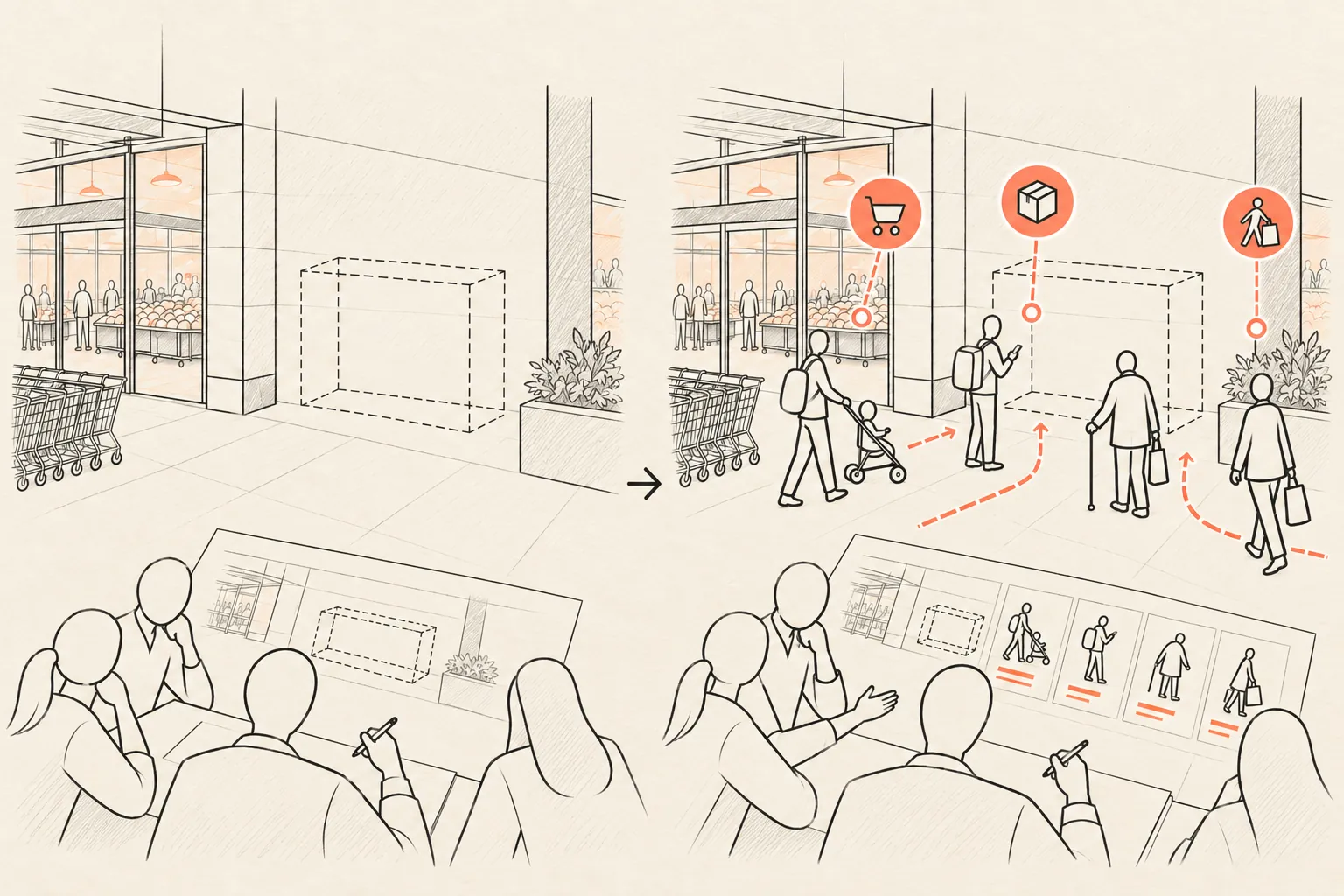
They began showing up in other teams’ proposals across Last Mile, and changed how those teams talked about who they were designing for. With my manager, I built a three-year staffing proposal for the design team around them. Company-wide layoffs took most of the team before either the research program or the plan could start.
At Amazon, a proposal moved when the evidence tied a customer outcome to investments the business was already making. I was improving the return on something already committed, rather than asking for something new.
Illustrations made with AI, and an exhaustive amount of art direction by Peter Sharp.