Building the conditionsfor the right thingsto ship faster.
- Role
- Senior Design Strategist(Service Design)
- Scope
- Eleven military treatment facilities and their leadership, from hand-tagging patient comments to network-level priorities
- Team
- With a design strategy partner and two data scientists we brought on, alongside the client’s chief experience officers
- Industry
- Military health care
Killing our own project
I inherited a printed booklet to help patients find their way. The bigger problem was that leaders could only act on the few patient comments someone had time to read. I set the booklet aside, and we built the tool that let eleven military treatment facilities hear all of them and see where to act first.
Adopted across the facilities, outlasting our engagement; escalated to the Defense Health Agency
I talked the client out of the booklet they’d hired us to make, and we built an AI-powered dashboard that let eleven military treatment facilities hear 100,000+ patient comments and act on what mattered first.
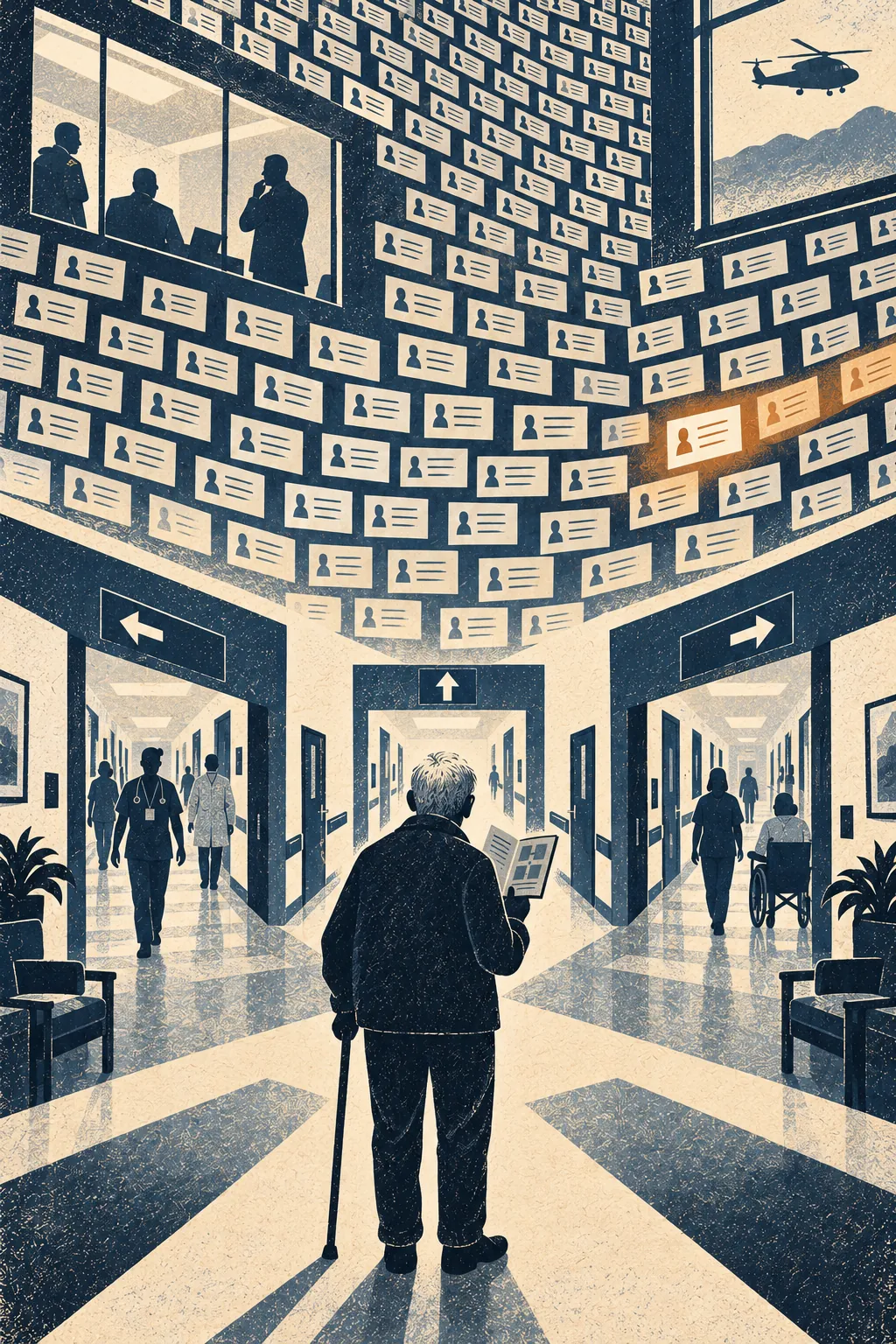
- A chief experience officer scrolled us through 100,000+ patient comments in a raw Excel export, and leaders could act only on the few someone had time to read. I pushed us to set aside the patient booklet I’d inherited, because fixing what sat behind those comments would do far more.
- I won the client over with a prototype built from their own patients’ comments; then we built an AI-powered dashboard to sort every comment, trained on thousands I tagged by hand.
- In the prototype, a deputy director saw bathroom cleanliness among the top ten pain points and acted on it right away.
- The dashboard was adopted across the eleven facilities and outlived our engagement.
- Role
- Staff Product Designer(Service Design and Design Strategy)
- Scope
- Across business units and functions of a ~250-person product org, from field research with sales agents to portfolio-level investment strategy
- Team
- Solo IC who built a working team for each initiative: head of design, senior UX researcher, senior product designer, staff product manager, head of engineering
- Industry
- Agriculture
Too busy running a business for our tools
I was asked to get more data from the few sales agents already on the platform. I found most were too busy running their businesses to use it, and turned the roadmap toward helping them run those businesses.
$50M a year, allocated through the planning process I redesigned around sales agents’ jobs
With no mandate, I redesigned how a product organization decided what to fund, and turned its roadmap toward the businesses its sales agents were running. That process decided where $50M a year went.
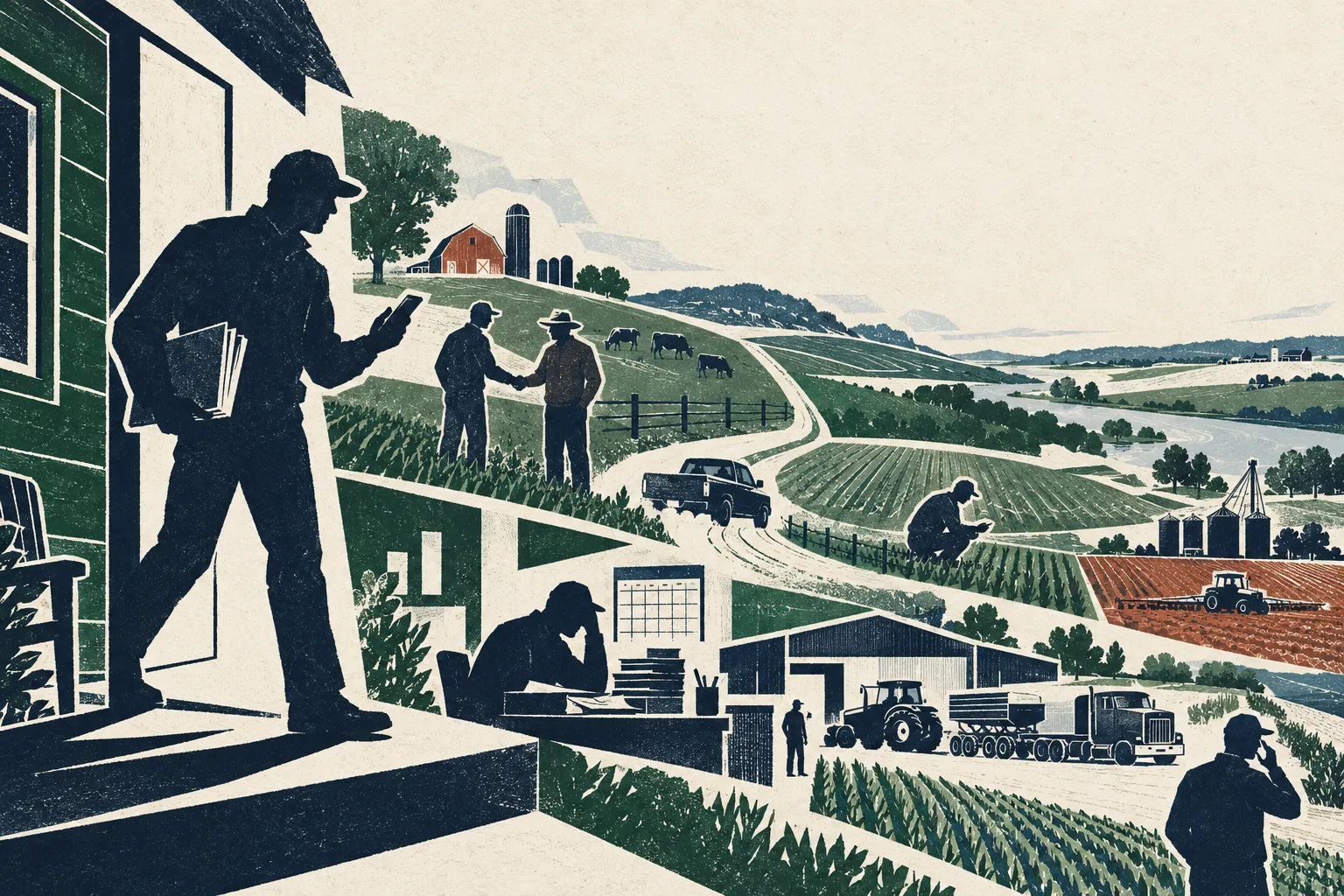
- Engagement was low, and the roadmap chased more data from the few sales agents already on the platform. I changed the question to why most weren’t there: the commercial team’s agency mergers were turning them into business managers with no time for field tools.
- Journey management didn’t fit days run by weather, disease and a phone that can’t go unanswered, so I switched to jobs-to-be-done, with no budget and no mandate.
- I founded a Design Strategy Center of Excellence and redesigned annual planning around sales agents’ jobs, so funding started from their needs. That process decided where $50M a year went.
- The approved white papers turned the roadmap toward running the agency as a business, and engagement closed at 44% against a 35% goal.
- Role
- Senior UX Designer(Service Design)
- Scope
- The whole pickup service, digital and physical, in the US and Spain, from ride-alongs with drivers to the organization’s definition of its customers
- Team
- With my manager, and partners in product, engineering, UX research, marketing and business development
- Industry
- E-commerce customer experience
One definition of the customer, across the whole service
A sliver of the checkout page raised a bigger question: who were our customers? The answer became the organization’s shared definition of them.
15 durable customer outcomes, rewritten in customers’ own words and used across the organization
One small slot on the checkout page led me into research across the whole pickup service, from drivers’ routes to lockers, and to fifteen customer outcomes, in customers’ own words, that the organization used to define what each kind of customer needs.
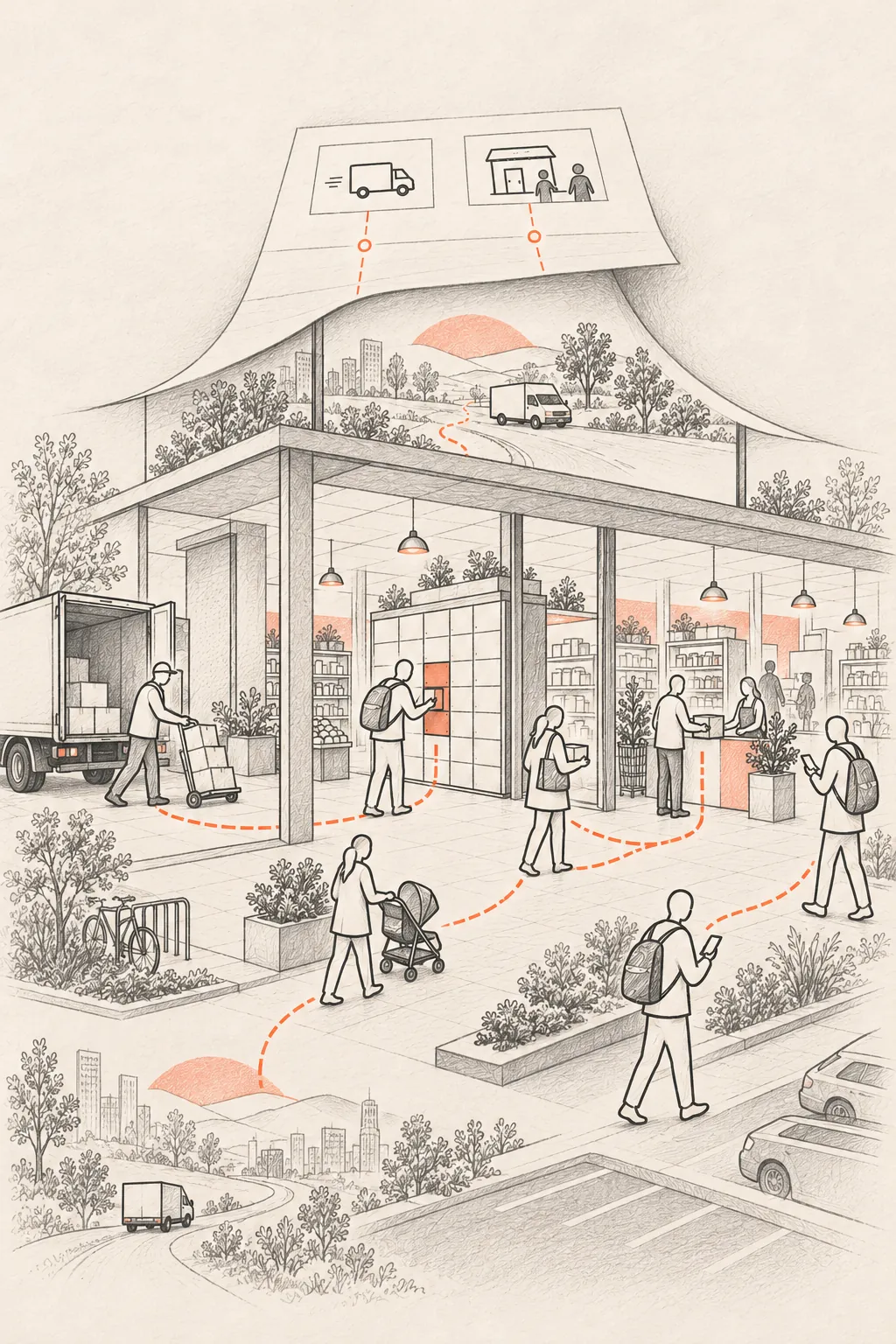
- Most customers who picked up an order didn’t come back for another pickup, and we were guiding their choice at checkout on assumptions. I moved from feature work to service design for the whole pickup service, because our picture of who our customers were was blurry.
- Service design had no charter, so I made room for it with my manager and built relationships across product, research, marketing and business development.
- A wall-sized blueprint connected customer behavior to the whole last-mile customer experience, and I rewrote our fifteen durable customer outcomes in customers’ own words, so every team could test its work against what each kind of customer needs.
- I won director approval for a multi-city research program, named the department’s most important for the next year; layoffs stopped it before it could start.
Independent work
In production · self-directedAn operating system for my own work.
Read the briefClose the brief
A governed workspace where AI agents do real work against my files under written rules. Every decision that governs future work gets an ID, a date and a quote, so a rule made once is still in force a week later. The agents read the register before they act.
Explore the systemBad decisions scale, too.
I study people, systems, and organizations
before assumptions become costly.
Beyond the work
Five questionsWhat sent me upstream?
Early in my career, I was part of a product launch that failed, then failed again with each iteration. I saw the defeat that leaves on an organization and its people, and I wanted to get good enough at designing services and products to prevent it next time.
What am I actually interested in?
How organizations make decisions, especially in complex services where people are at the core of the business model. I love to untangle the tangible and intangible systems that dictate how experiences unfold, and the best outcomes for customers start with better decisions internally. That's a hard thing to get right.
Why does this matter more now?
AI is rapidly accelerating how fast organizations build, so it matters more than ever to identify the right problems early, because the downstream effects compound. Coherent systems of knowledge and context become the most valuable currency inside an organization, and building those is the part I want to be doing.
How do I work with AI?
It gives me technical range I didn't have, and it gets me to something tangible much faster, so my time goes to the concept, the strategy and the direction instead of troubleshooting. As a systems thinker, I use it to pull several frameworks and methods together into one clear output, and to pressure-test a problem through more lenses and reframes than I could alone. That leaves me doing the parts that matter most: judging, critiquing, coaching, building alignment, and writing the rules that keep a complex system focused and its output good.
Where am I less useful?
Hand me a settled roadmap and one screen to perfect, and you'll get competent work from someone quietly going flat. The further I am from the decision, the less I'm worth, which is a strange thing to advertise, but better said now than discovered together in month six. I like repairing very large systems, and I'm not the person you want polishing a small one.
Tell me where you're trying to go. I'll tell you if I can help you get there.